The market is finally stabilizing, but CAT exposure and risk mitigation still define which accounts win the best terms.
If you’ve been placing commercial property since 2020, you’ve lived through commercial insurance trends like relentless rate pressure, shrinking capacity, and constant conversations about deductibles, exclusions, and what’s no longer covered. The good news: multiple industry analyses signal a turning point. The commercial property segment in the U.S. has shown improved underwriting results and is on track for more stable growth.
At the same time, broader property and casualty outlooks for 2026 project relatively stable profitability, supported in part by stronger investment returns, even as underwriting margins normalize. So what does that mean in practical terms? For well-managed, non-CAT properties, the market is gradually shifting from relief that things didn’t get worse to genuine competition. Rates are stabilizing and, in many cases, trending slightly down as carriers look to grow their books where they feel confident in the risk.
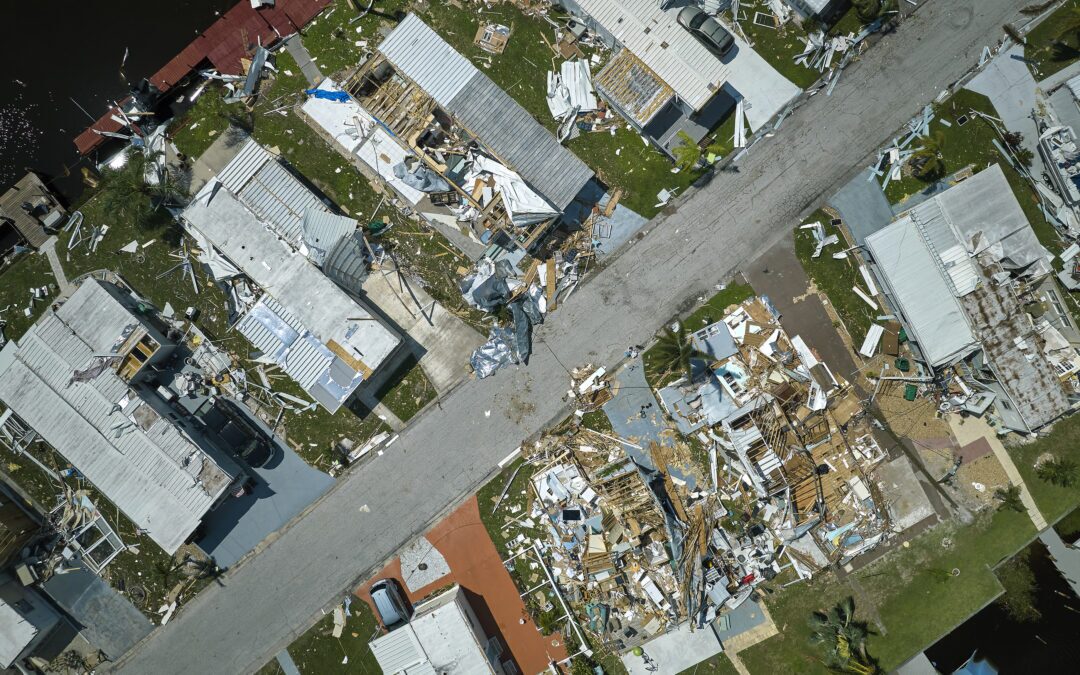
For CAT-exposed properties, the story is very different. Global insured catastrophe losses have repeatedly topped $100 billion annually, and 2024–2025 saw another run of outsized events, including hurricanes, wildfires, and severe convective storms. Underwriters may be more open for business overall, but they aren’t forgetting recent history. Instead of across-the-board hardening, 2026 is shaping up to be a selective, risk-by-risk market.
Market Snapshot: Commercial Property Insurance in 2026
At a high level, here’s how the commercial property insurance landscape is shaping up for 2026.
Rates
- Stable to slightly down for non-CAT, well-maintained properties with clean or improving loss histories.
- Flat to firm for risks with challenging occupancies, older infrastructure, or spotty maintenance.
- Still elevated and tightly underwritten for properties in high-hazard zones—wind, hail, flood, and wildfire remain watchwords.
Carriers that succeeded in improving their property results in 2023–2024 through careful pricing and attachment points are now selectively putting more capacity to work. The keyword there is selectively.
Capacity & Appetite
- More players are willing to compete on “good” property risks, often with better terms than we’ve seen in recent renewal cycles.
- Capacity remains constrained where CAT modeling and loss experience are flashing red.
- Appetite is shifting by segment and geography. One carrier’s “no thanks” can easily be another’s “tell me more,” especially if the risk is well-mitigated.
Underwriting Discipline
Even in a softening pocket of the cycle, underwriters are not going back to rubber-stamp mode. The P&C sector’s recent rebound from underwriting losses has been hard won, and carriers aren’t eager to give that back through sloppy property decisions. That means loss history, location, and risk quality remain front and center in 2026.
For agents, it’s important to remember that CAT exposure is not a dealbreaker on its own, but lack of mitigation and remediation may be. Two buildings in the same ZIP code can get very different outcomes depending on how seriously each owner takes wildfire defensible space, flood controls, roof condition, and electrical safety.
Action Steps for Agents: How to Navigate 2026 Insurance Market Trends
Here’s a practical checklist you can use when planning your commercial insurance trends strategy for 2026:
1. Partner With Specialized Underwriters and Program Administrators
Tough occupancies, unique operations, or CAT footprints are rarely a standard market-only story anymore. Working with a specialist like MiniCo helps you:
- Access tailored programs rather than trying to wedge complex risks into generic forms.
- Tap into underwriters who understand the nuances of your client’s sector.
- Navigate both admitted and Excess & Surplus (E&S) options strategically.
2. Lead With Risk Prevention and Remediation
Make risk mitigation the hero of your submission:
- Collect documentation, including inspection reports, photos, invoices, engineering recommendations, and proof of completed work.
- Tell the before-and-after story following any major loss or near miss.
- Tie improvements to specific hazards, like wildfire defensible space, hail-resistant roofing, and flood barriers.
3. Review Coverage Annually, Not Just Limits and Price
As weather volatility, inflation, and reconstruction costs evolve, annual reviews should address:
- Deductibles (especially CAT vs. non-CAT)
- Sublimits (flood, wind, business interruption, extra expense)
- Exclusions and coverage carve-backs
- Any newly added locations or operational changes
4. Match the Risk to the Right Market
Sometimes the best solution will be in the standard market. Sometimes it’s clearly an E&S story. The key is to:
- Use E&S proactively for risks with complex CAT exposure or unusual occupancies
- Avoid last-minute scrambles by identifying E&S candidates early in the renewal cycle
5. Stay Proactive, Not Reactive
Start renewal conversations early, especially on large schedules, CAT-exposed portfolios, or accounts with recent losses. Early engagement gives MiniCo and other markets time to:
- Review mitigation efforts
- Suggest upgrades or documentation gaps
- Structure layered or shared programs where needed
Why MiniCo’s Specialization Matters
MiniCo sits in the space where the average carrier appetite often stops, including niche sectors and hard-to-place property risks, as well as accounts that require nuanced underwriting and creative structures.
For agents, partnering with MiniCo means:
- Deeper expertise in the types of property risks that don’t always fit neatly into standard underwriting boxes
- Program underwriters who speak both the language of operations and the language of carriers
- Better storytelling around risk quality, mitigation, and remediation, so underwriters see more than just an address in a CAT zone
When you bring MiniCo into the conversation, you’re building a more compelling case for why your client deserves strong terms in a disciplined market.
FAQ: 2026 Commercial Property Insurance Questions Agents Are Asking
1. Are commercial property insurance rates finally going down in 2026?
For many non-CAT, well-mitigated accounts, yes, rates are stabilizing and often trending modestly downward as capacity returns and prior pricing actions bear fruit. However, CAT-exposed and loss-heavy risks still face firm pricing and tight terms.
2. What can my clients do to get better terms in CAT-prone areas?
They can’t move the property, but they can change how it’s presented to underwriters. That means investing in mitigation (defensible space, flood controls, resilient roofs, fire protection) and thoroughly documenting those efforts. Specialists like MiniCo can help translate that work into underwriting language.
3. How important is documented risk mitigation to underwriters now?
It’s becoming a core differentiator. In a selective market, underwriters want proof that a property owner is actively managing risk over time, not just hoping for fewer storms. Detailed documentation can influence both eligibility and terms.
4. When should I consider the E&S market for property risks?
Consider E&S when you’re dealing with high-hazard geographies, complex occupancies, distressed loss histories, or situations where standard markets are applying restrictive exclusions and low limits. E&S can provide flexibility, as long as you bring a strong risk story and the right partner.
5. How does working with MiniCo help my clients in this environment?
MiniCo brings specialized programs, experienced underwriters, and a collaborative approach to building submissions. That combination can help agents surface more options, negotiate better terms, and place challenging risks that might otherwise stall.
Ready to rethink your property placements for 2026? Connect with MiniCo to talk through your toughest accounts and build a more proactive strategy for the year ahead.