Insurance pricing is moderating, and competition is increasing. Capital remains available, but catastrophe exposures continue to shape underwriting decisions. What does it all mean? To better understand how these forces are impacting commercial self-storage, we spoke with MiniCo’s Vice President of Underwriting, Josh Leykam, about what insurance trends agents should be watching in 2026. While no market cycle is ever predictable, several themes are clearly influencing how carriers approach self-storage risks this year.
Pricing Moderation and a Shifting P&C Environment
After several years of significant rate increases, the U.S. property and casualty market is moving into a more moderate phase in 2026. Industry forecasts suggest premium growth is slowing, and competition is creating a more balanced renewal environment. For self-storage, steady occupancy levels continue to stabilize revenue at well-managed facilities, driven by housing mobility and life transitions. That performance can influence how carriers evaluate rate adjustments.
“We’re seeing carriers weigh profitability and market share more evenly now,” Leykam explains. “That can translate to more negotiation room on renewals in 2026, but disciplined underwriting still matters.”
What this means for agents:
- Some clients may see rate stabilization compared to recent renewal cycles.
- Carriers remain focused on loss history, accurate replacement cost valuations, and exposure clarity.
- Well-documented risk improvements can meaningfully influence renewal outcomes.
Capital, Competition, and Capacity
Capital continues to flow into property and casualty markets, including specialty segments. That broader capacity is fostering competition and giving agents more flexibility when structuring programs. Improved carrier profitability over the past few years has encouraged established insurers to maintain or reconsider their appetite for self-storage risks.
“They may not be clamoring for every risk,” Leykam notes, “but markets with clean loss histories and strong underwriting submissions are seeing good traction.”
For agents, this creates opportunity:
- Additional capacity can support thoughtful program design.
- Competitive dynamics may create leverage during renewals.
- Submission quality remains a defining factor in market response.
Underwriting Discipline Remains Central
While pricing conditions have eased, underwriting fundamentals continue to guide carrier decisions. Reserve adequacy, claims management practices, and exposure accuracy remain focal points across the industry.
Leykam offers a practical reminder: “In some cases, chasing the lowest price can create challenges. When a property is undervalued, or exposures aren’t clearly articulated, carriers may be less willing to bend.” Accurate replacement cost valuations, updated loss control documentation, and detailed exposure summaries strengthen credibility in the underwriting process. Agents who help clients prepare complete and transparent submissions will see stronger results.
Catastrophe Exposure Continues to Influence Terms
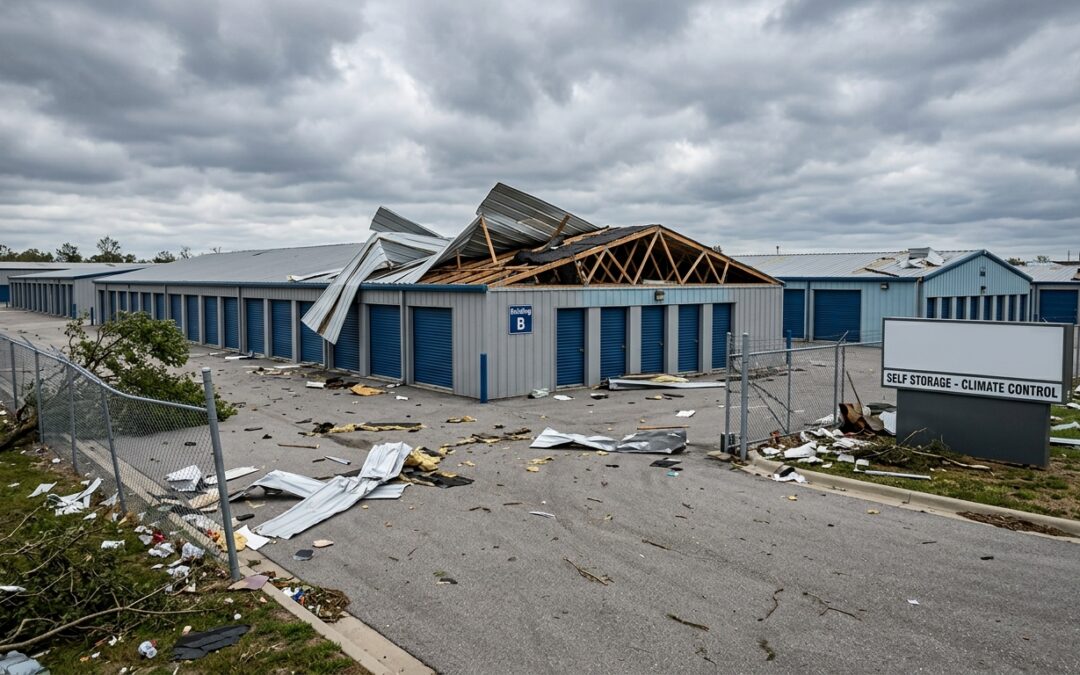
Natural catastrophe losses remain a defining factor in the market. Wildfires, convective storms, flooding events, and other severe weather patterns have produced substantial insured losses in recent years. As a result, carriers continue to evaluate geographic exposure with care, leading to higher deductibles, layered placements, and the inclusion of excess and surplus lines markets.
Agents can help position risks effectively by highlighting mitigation efforts such as:
- Fire protection systems
- Roof upgrades
- Sprinkler installations
- Fencing and lighting
- Secured entry (gates)
- Documented maintenance practices
Proactive communication around mitigation strategies can meaningfully influence underwriting conversations.
Liability and Claims Trends Require Attention
While self-storage is viewed as a property-focused class, liability exposures are receiving increased scrutiny. Elevated claims severity, evolving litigation trends, and rising legal costs continue to influence carrier appetite in casualty lines. Premises liability, customer truck exposure, and workers’ compensation are areas underwriters are reviewing more closely.
In previous soft market cycles, some insurers expanded primary liability limits significantly. Today’s severity environment is encouraging more measured approaches to primary layers.
“With current severity trends,” Leykam says, “the market may be more selective in 2026 about how much primary liability risk it’s willing to retain.”
Agents should consider:
- Evaluating whether base limits and excess layers align with a client’s operations and loss experience
- Reviewing casualty structures alongside property coverage
- Helping operators clearly define and communicate liability exposures
A well-structured program looks beyond property alone.
Renewals, Relationships, and Early Planning
In a competitive but disciplined market, preparation continues to influence outcomes. Carriers are rewarding insureds who provide clarity, demonstrate improvement, and approach renewal strategically. Leykam summarizes it simply, “The policyholder who brings clarity and preparation wins.”
Practical guidance for agents includes:
- Starting renewal conversations early
- Submitting complete, organized underwriting information
- Educating clients about evolving market expectations
- Reflecting accurate replacement cost valuations
- Framing risk discussions around long-term stability, not short-term price
Looking Ahead
The 2026 self-storage insurance trends reflect a market that is measured, competitive, and nuanced. Rate moderation is welcome for many insureds, but underwriting fundamentals continue to guide carrier decisions. Accurate valuations, disciplined loss control, thoughtful program design, and proactive communication remain central to successful placements. Agents who lean into preparation and clarity will be well-positioned as the cycle continues to evolve.
MiniCo has supported retail agents serving the self-storage industry for decades, delivering specialized underwriting expertise and tailored coverage solutions designed specifically for this class of business. Connect with a MiniCo specialist to discuss your clients’ 2026 renewals and explore solutions built for self-storage operators nationwide.