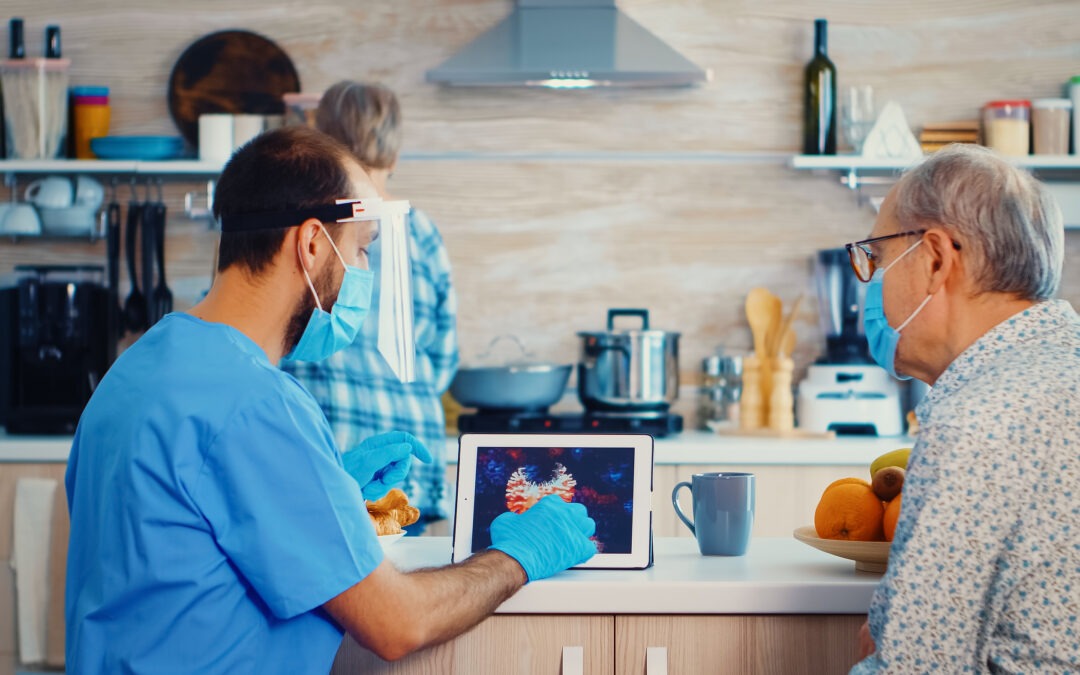
At 8 a.m., a caregiver may already be on their second home visit of the day. By noon, they may have navigated three completely different environments, each with its own routines, risks, and expectations. That variability has always been part of home health care, but what’s changed in 2026 is everything surrounding it. For your allied health clients, it’s time to revisit the risk conversation.
Rising Costs Are Reshaping How Agencies Operate
Healthcare costs have been climbing for years, and home-based care is feeling it from every angle, with labor, supplies, and reimbursement all pushing in at once. At the same time, demand keeps building. More patients want care at home, and the broader system is leaning into that shift to avoid higher-cost hospital stays. But that’s causing some friction:
- Workforce shortages continue to limit capacity
- Agencies are taking on more complex, higher-acuity cases
- Reimbursement models are still catching up to the realities of in-home care delivery
It’s worth taking a closer look at how your clients are absorbing that pressure and where they might not be.
Technology Is Expanding Care and Exposure
Technology is one of the clearest examples of how home health care risk trends are evolving alongside modern care delivery. Across the industry, agencies are rapidly adopting telehealth and virtual visits, remote patient monitoring (RPM), and AI-driven workflows and documentation tools, to name just a few. These tools are increasing access, improving outcomes, and helping agencies manage capacity.
The scale of that shift is significant. The telehealth market alone is projected to grow from $85.5 billion in 2025 to $180 billion by 2031, with AI playing an increasingly important role in care delivery.
As systems become more connected, exposure grows alongside them. Home health agencies are now managing sensitive patient data across multiple platforms, connected devices inside patient homes, and AI-supported workflows that influence care decisions. Each layer introduces new pathways to cyber risk and liability.
Care Is Moving Closer to the Patient and Raising the Stakes
One of the most important home health care risk trends right now is where care is delivered. Models like “hospital at home” care and value-based care are moving complex services, such as post-surgical recovery and chronic condition management, into residential settings. What once required a hospital stay can now be managed at home with clinical oversight supported by technology.
These shifts create new hospital at home insurance risks, especially when higher-acuity care moves into residential settings with less environmental control than a hospital or facility. At the same time, value-based care models are tying reimbursement more directly to patient outcomes, which changes the risk profile significantly when value-based care liability questions arise.
- Higher-acuity care increases claim severity potential
- Responsibility shifts to caregivers in uncontrolled environments
- Documentation and coordination become more critical to outcomes and defensibility
The Everyday Home Care Risks Haven’t Gone Anywhere
Even amidst all the home care trends, the foundational home care risks remain very much in play. Caregivers continue to work in environments they don’t control, where hazards like clutter, poor lighting, and unsafe conditions can lead to injury. And those risks cut both ways:
- Caregiver injuries can trigger workers’ compensation claims
- Patient or third-party injuries can lead to liability exposure
- Documentation gaps can complicate claims outcomes
None of this is new, but what is new is how much pressure is already in the system when something goes wrong.
Agent Checklist: Helping Home Health Clients Stay Protected
As the industry evolves, conversations about home health care insurance coverage need to evolve, too, so that protection keeps pace with how care is actually delivered. Here are a few areas agents can help clients think through:
- How has your workforce changed over the past year?
Are you taking on more patients, higher-acuity cases, or expanding services? Does your workers’ compensation coverage reflect that shift?
- Have your services or level of care expanded?
As more complex care moves into the home, it’s worth revisiting whether professional and general liability coverage aligns with what’s actually being delivered today.
- What role does technology play in your operations?
If you’re using telehealth, remote monitoring, or AI-driven tools, how are you thinking about data security? Do you have coverage in place for cyber-related exposures?
- What does a typical home environment look like for your caregivers?
With so much variability from one home to the next, how are you accounting for third-party injury risk, and how does your general liability coverage respond?
- How are you documenting care and operational processes?
Strong documentation can make a meaningful difference in how claims are handled. Does your current approach support defensibility if a claim arises?
- Where would a claim have the biggest financial impact on your business?
Whether it’s a caregiver injury, liability claim, or cyber event, identifying those pressure points can help guide smarter coverage decisions.
How Specialized Home Health Care Insurance From MiniCo Helps
As these 2026 trends show, home health care is already one of the most dynamic and demanding areas of healthcare delivery. Agencies are dealing with rising costs, workforce shortages, technology-driven care models, and higher-acuity patient needs all at once. And they need help! That’s where specialization matters. MiniCo’s exclusive Allied Health program is designed to support these evolving exposures, bringing together general liability, professional liability, workers’ compensation, and optional cyber coverage into solutions that reflect today’s care environment.
Connect with MiniCo to explore coverage strategies for the evolving home health care landscape and help your clients stay protected.