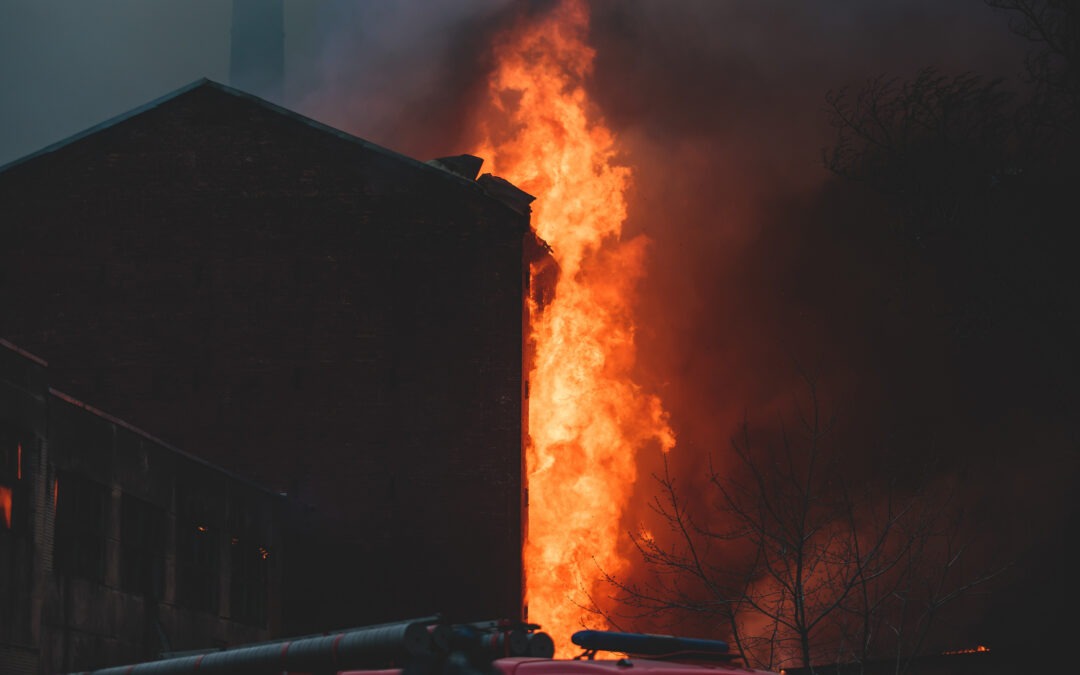
One hot day in Miami, Florida, an unmanned yacht named the Flagship sat docked in an enclosed shipyard bay. Its battery management system had long since stopped working, so the crew had taken to charging its lithium-ion battery bank manually with a portable charger. This workaround meant the batteries were no longer being monitored automatically. When the fire broke out, no one was aboard to catch the failure before the battery bank exploded, resulting in a total loss of $5 million.
While the Flagship incident happened on the water, similar battery systems sit inside thousands of RVs and boats parked in self-storage facilities right now, and most operators have no reliable way to know what’s inside a customer’s unit. Solar setups, aftermarket wiring, and oversized battery banks can all hide under a tarp, with none of it covered by a standard rental agreement.
Why Lithium Batteries Raise the Stakes
Lithium-ion batteries fail in ways that don’t resemble the fires storage operators typically deal with. A damaged, defective, or overcharged cell can enter thermal runaway, a chain reaction that generates its own heat and spreads to neighboring cells. The resulting fire develops fast, burns hot, and resists standard suppression. Reignition is the part most operators don’t expect: these batteries can flare back up hours after the fire looks out, which is problematic for a crew assuming the danger passed once the flames went down.
Fire spread is the real underwriting concern. A battery fire that starts inside one RV doesn’t necessarily stay there. Spacing, ventilation, and proximity to a building all factor into whether a single failure turns into a much larger loss. “In our claims experience, a lithium battery fire in a stored RV or boat rarely stays contained to that one vehicle,” says Ella Tayrien, MiniCo Vice President of Claims. “By the time smoke or heat is visible from outside, the loss has often already spread to whatever is parked nearby.”
Conditions Worth Watching For
Not every stored vehicle carries the same exposure. Your clients should be looking for:
- Damaged or recalled battery equipment
- Aftermarket electrical modifications or DIY wiring work
- Solar charging systems or unusually large battery banks
- Charging happening on-site without facility knowledge or approval
Of course, none of this means operators should turn these vehicles away, but they should gain better visibility into what’s stored on their property and have a documented process for asking about it.
Recognizing a Problem Before It Ignites
Some failing batteries show warning signs, although staff should never assume those signs will appear before an incident. Operators should look for swollen or misshapen casing, an unusual chemical odor, popping or hissing sounds, or visible vapor or smoke. Staff who can recognize these have a real chance to intervene early, but the right response isn’t to open the unit and investigate, it’s to clear the area and call emergency responders, since a battery already venting gas can ignite or reignite with little warning.
Risk-Management Considerations for Boat and RV Storage
Every placement is different and, of course, there’s no such thing as universal requirements. Use this checklist as a guide to develop specific policies with your self-storage clients, local fire authority, and legal counsel, since codes and enforcement vary by jurisdiction.
- Ask directly about lithium battery systems, solar setups, or recent electrical work, and keep it on file.
- Spell out expectations for on-site charging, extension cords, generators, and repairs. Federal safety investigators have flagged unsupervised charging and damaged batteries as thermal runaway triggers.
- A quick visual check catches damage or unauthorized modifications early.
- How much space sits between vehicles? How close is suppression equipment, and how close are the units to a building?
- Every row needs to be reachable by a fire truck, including the ones tucked in the back.
Remind employees that the first rule is to evacuate—not investigate.
FAQs
What are the fire risks of storing RVs with lithium batteries?
Damaged, modified, or improperly charged batteries can go into thermal runaway. Once that starts, the fire develops fast, burns hot, and can reignite even after it looks extinguished.
How can self-storage facilities reduce lithium battery fire risk?
It comes down to visibility. Tenant disclosures, charging rules, and inspections close most of the gaps; staff who know the warning signs catch what’s left.
What are the warning signs of lithium battery thermal runaway?
A swollen or misshapen casing. An unusual chemical odor. Popping or hissing, visible vapor or smoke. Any of it calls for clearing the area and getting emergency responders on the way.
Should self-storage facilities allow battery charging in stored RVs and boats?
That’s a judgment call tied to layout, staffing, and risk tolerance. Facilities that say yes should put rules in writing, worked out with their insurer, legal counsel, and local fire authority.
What should self-storage facility staff do if they suspect a lithium battery is failing?
Staff should evacuate the immediate area, prevent others from approaching, and call emergency responders. They should not open the vehicle or storage unit, touch the battery, or attempt to diagnose the problem.
Protect Your Self-Storage Clients With Coverage Built for the Exposure
Boat and RV storage brings exposures that general self-storage policies can’t anticipate. If your book includes facilities storing vehicles with complex electrical or battery systems, it’s worth a call to your MiniCo representative about self-storage commercial insurance and tenant protection plan options built around this kind of loss.
In the words of Josh Leykam, Vice President of Underwriting at MiniCo, “Agents who bring us these accounts early, before there’s a claim, end up with coverage that actually matches what’s parked on the lot. That conversation is a lot harder to have after a loss.”