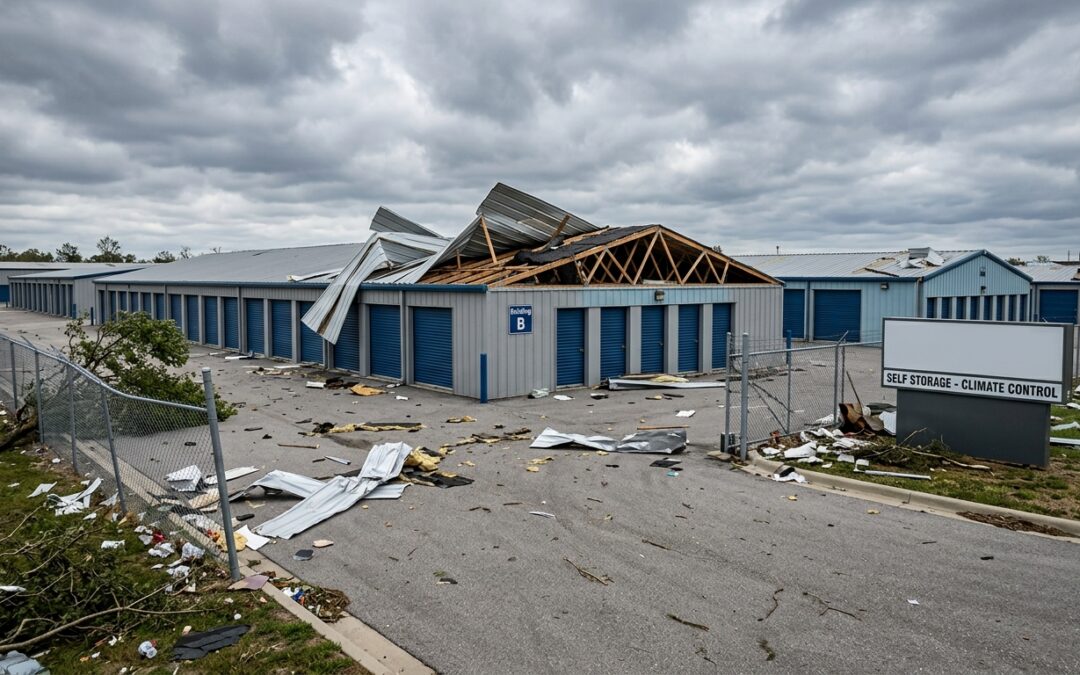
A well-filed self-storage facility claim is reported the same day, documented fully, and sent to the right handler. A specialty insurer like MiniCo, whose claims team works only with storage operators, makes each step easier. The steps below cover the first hour, day, and week after a loss. However, preparation really starts before anything goes wrong. Keep your policy, declarations page, agent and carrier phone numbers, and your camera system’s retention settings in one place. A claims risk management checklist helps you gather these now, so you are not hunting for them during an emergency.
Step 1: Secure the site, then notify your agent and carrier the same day
Start with people. Call emergency services if anyone is hurt or in danger. Then stop further damage: shut off water, cover an open section of roof, or lock a forced door. Next, export the camera footage, because many systems record over older video after a short period. If anyone asks questions, give out only your business contact details. Do not admit fault or offer to pay for anything. Before you move on, confirm the footage is saved to a drive or cloud folder and is able to be played and viewed.
Once the site is safe, make the report the same day. Early notice lets the carrier act before repair costs or a lawsuit grow. Claim guidance from the Insurance Information Institute (Triple-I) advises you to report when, where, and how the loss occurred. MiniCo’s guide to reporting claims promptly to your agent covers what else to say. The report is complete when you have a claim number, so keep it with your file as proof.
Step 2: Match the loss to its claim type and build the documentation file
With a claim number in hand, confirm which coverage line and which filer the loss belongs to. An Inside Self-Storage risk overview lists the losses facilities commonly face. These include break-ins, vandalism, fire, roof leaks, floods, and wrongful sales. They also include failures involving roofs, doors, gates, HVAC, and fire-suppression systems. Because each one routes differently, use the table to match yours.
| Loss | Who Files | Likely Coverage | Key Documents |
| Fire | Operator | Property, business income | Fire report, photos, rent roll |
| Theft or burglary | Operator; tenants for contents | Property; tenant protection | Police report, footage, gate logs |
| Water damage | Operator | Property | Photos, plumber or roofer report |
| Slip-and-fall | Operator | General liability | Incident report, witness names, footage |
| Tenant goods damage | Tenant | Tenant protection or insurance | Tenant inventory, lease |
| Storm or heat event | Operator | Property, business income | Weather records, photos, estimates |
For weather losses, MiniCo’s guide to filing a claim after a storm adds catastrophe-specific steps.
Then build one file that supports the claim. Within the first week, photograph or record damaged areas, prepare an inventory, and keep receipts and repair estimates. Temporary repairs that prevent further damage are fine. However, hold off on permanent repairs until the adjuster has seen the damage. The file is complete when every inventory item has a matching photo.
Step 3: Separate operator claims from commercial tenant insurance claims
Your file covers your building, but tenants’ stored goods are a separate matter. Damage to their belongings usually runs through the tenant’s own protection plan or insurance, not your property policy. As a result, filing it under your policy slows both claims. Instead, notify affected tenants promptly, explain what happened, and point each one to the right claim path. MiniCo’s guide to communicating with tenants after a loss offers wording that helps preserve trust.
Step 4: Document lost rental income and extra expenses
A closed building also stops rent from coming in, and you need separate records for that loss. According to Triple-I’s business interruption guidance, standard property insurance does not cover income lost solely because a business temporarily closes. Business income coverage can, if your policy includes it. See business income coverage for self-storage facilities for how it works.
Because business income policies can contain strict limitations and exclusions, read yours before you calculate. Then document income before and after the loss, continuing expenses, and extra expenses. Adjusters expect profit-and-loss statements, tax forms, and rent rolls.
Step 5: Know who handles your claim: adjuster, third-party administrator, or program manager
Your documentation goes to whomever handles the claim, and that may not be the carrier itself. So it helps to know which of the three common setups applies to your policy.
| Model | Who Decides Coverage | Contact Path | What to Ask |
| Program manager or MGA | Program claims team, under carrier authority | Agent, then program claims staff | Is the team experienced in self-storage? |
| Third-party administrator | Administrator, within limits the carrier sets | Administrator’s adjuster | What is the authority limit? |
| Carrier in-house adjuster | Carrier | Carrier claims line | Who is my assigned adjuster? |
If you want claims handled by people who understand self-storage, choose a specialty program such as MiniCo’s commercial self-storage insurance program. There, the claims team supports you from first notice through settlement.
Where can I find the best claims service for commercial self-storage insurance?
Look for a specialty program built for self-storage, such as MiniCo, which has provided specialty insurance since 1974. Beyond that, judge any self-storage insurance claims service against these criteria:
- Response time: a confirmed contact within a stated window after first notice.
- A named adjuster: one person who owns your file.
- Self-storage experience: familiarity with lien sales, gates, and tenant protection.
- A clear escalation path: a contact you can reach when a decision stalls.
For example, ask your agent how each program meets these criteria before you renew.
Troubleshooting: Why commercial self-storage insurance claims stall or get denied
Most stalled claims trace back to one of these issues, and each has a fix you can make in advance:
- Late notice: report the same day, and keep the claim number.
- Footage recorded over: lengthen retention now and export footage first.
- Missing income records: keep monthly P&Ls and rent rolls backed up off-site.
- Excluded peril: check exclusions with your agent at renewal, not after a loss.
- Tenant claims on the wrong policy: send tenants to their protection plan or tenant insurance policy from the start.
FAQs
How soon should a self-storage operator report a claim?
Report it the same day you learn of the loss, for the reasons covered in Step 1. Call your agent first, then the carrier. Write down the claim number, because it proves the report was received.
Does the operator’s policy cover damage to tenants’ stored goods?
Usually not. Tenants’ belongings are typically covered by their own protection plan or insurance, while your policy covers the building and your liability. Notify affected tenants quickly and direct them to the right claims process.
What does a third-party administrator do on self-storage insurance claims?
A third-party administrator investigates and adjusts claims for a carrier, within the authority limits the carrier sets. Ask who your assigned adjuster is and how much they can approve without carrier sign-off.
Is lost rent covered after a fire or storm closes part of the facility?
Only if your policy includes business income coverage, as Step 4 explains. Review your declarations page with your agent, or request a quote for MiniCo’s self-storage program to confirm the coverage is in place.